This is by far the best place we have stayed in Rajasthan — it surpasses any five star hotel. … Just the vibe in the farm is incomparable.

A 46-year farm. Fifty-foot trees. Seasonal fruit and vegetables. Animals on equal footing. Desert sand turned to living soil. Cared for because this is how we want to live.
This is by far the best place we have stayed in Rajasthan — it surpasses any five star hotel. … Just the vibe in the farm is incomparable.
The farm came first, always. The buildings were built to fit around it, not over it — that's what you feel here.
Mango. Jamun. Amla. Trees this old take decades to give this much. Always something in season.
We live here because we want to eat what we grow. The garden decides the menu.
Residents, not a feature. On equal footing with the rest of us. Always have been.
The soil, the quiet, the pace of things growing. The garden sets the rhythm here.
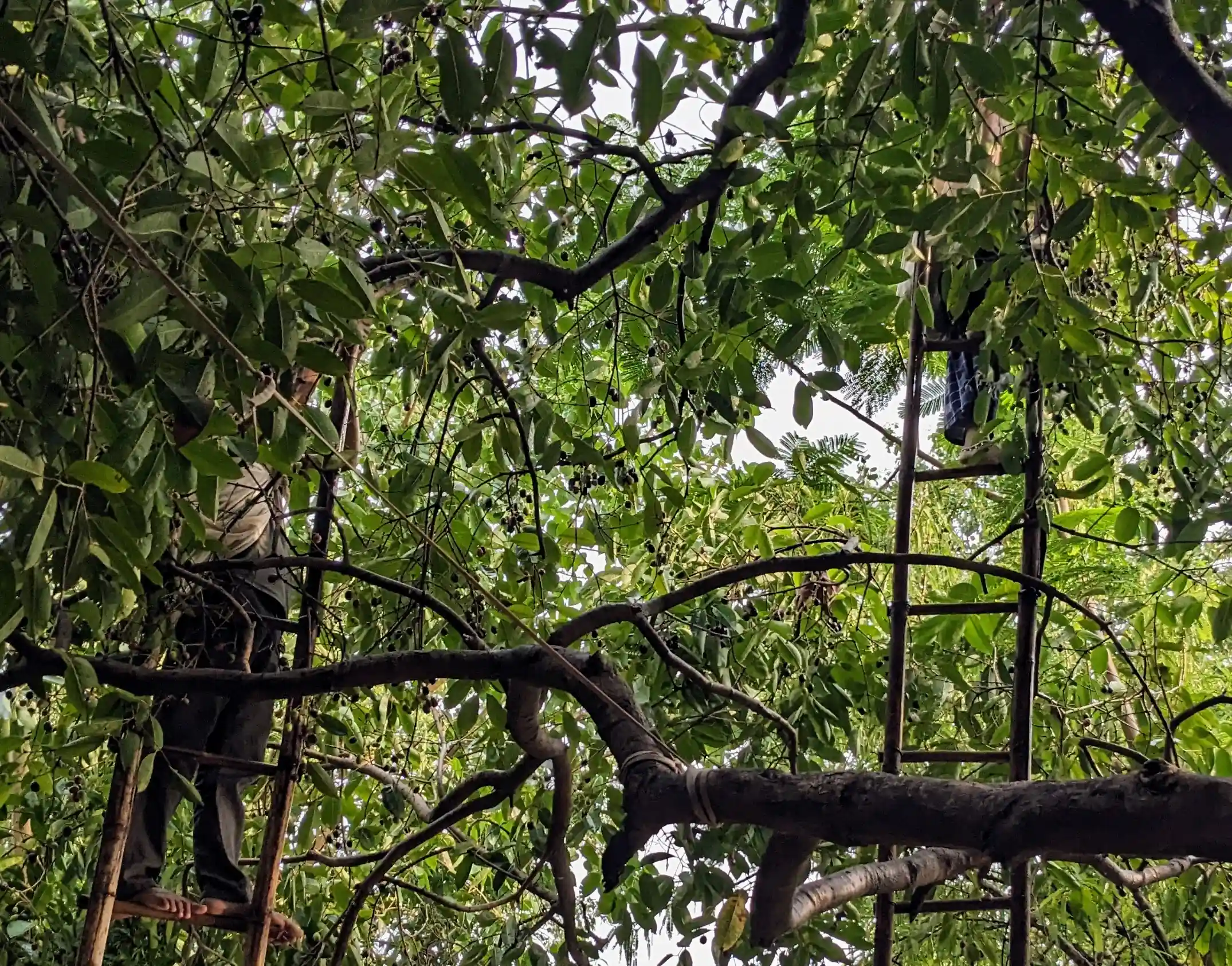
The oldest amla trees still carry the heaviest fruit. By December, their branches bend under green berries, so heavily that we lean bamboo ladders into the crowns to pick them. We eat the fruit, pickle it, and dry it. Decades of drip irrigation, rainwater harvesting, and compost from our cows turned sand into living soil.


The jamun season lasts three weeks. Then it is gone for another year. The Pushkar summer builds for months — dry, relentless heat. Then the first rains arrive. Within days, the jamun trees are loaded. Dark purple berries, the size of your thumbnail, sweet and sharp and intensely Indian. To reach them you need a bamboo ladder, a strong grip, and no fear of heights. Vishwajit goes up first. The berries come down in cloth spread between two people, caught before they hit the ground, because a jamun that falls bruises.


May and June. The hottest months. That's when the mango decides it's ready. You don't get a say. Some of these trees were here before the farm had a name. A mango takes years to fruit and a decade to become what you see — a canopy wide enough to stand under in the Rajasthan heat, branches thick enough for a man to sit in. We pick them the way we always have. One man climbing up, picking by hand. No machinery. No nets. In season, you will eat these mangoes at breakfast — picked from that tree the day before.


Through spring, lemons heavy enough to weigh the branches sideways. Into summer, papaya after papaya, some of them larger than your forearm, going from green to deep orange before anyone picks them. Reach up and pull a lime off a branch. Squeeze it into your water glass while the pool turns gold in the afternoon light.


Across three seasons, twenty vegetables grow in the field fifty metres from your room: spinach, loki, tomatoes, okra, eggplant, mint, basil — whatever is ready that morning is what the kitchen gets. Someone picks it. It arrives at your table the same day.
The farm gives the kitchen its starting point and its discipline. This works best for guests who are curious about where food comes from and happy to eat what the field offers that day. Freshness comes with less choice; that is the honest trade-off.


A working farm means animals. They are residents, not a feature. There are cows, horses, goats, dogs, hens, and fish. The horses graze freely across the lawns. The dogs will find you before breakfast. The goats will expect to be fed. The milk comes from our cows. The eggs from the hens. Milk, butter, yoghurt, eggs mean more when you know exactly where they came from.


There are gardens for different times of day: lotus ponds, fountains, and bougainvillea supported for twenty years to stand like trees. You are not on the edge of the garden. You are inside it. Every room opens onto lawn, trees, or flowers. The pool sits in the middle of it all. The gardens are meant to be used. Sit under trees, walk slowly, read on the grass, nap after lunch, eat outside.


You don't visit the farm. You wake up inside it. Walk out of your room before breakfast. The light is low and the dogs are already moving between the trees. Someone is watering the kitchen garden. The cows are in their corner of the farm. The smell of the first meal is beginning to come from the kitchen. The pool is still. The fruit trees are overhead.
