No farm, no good food. It's that simple. A real working organic farm, not a marketing slogan.

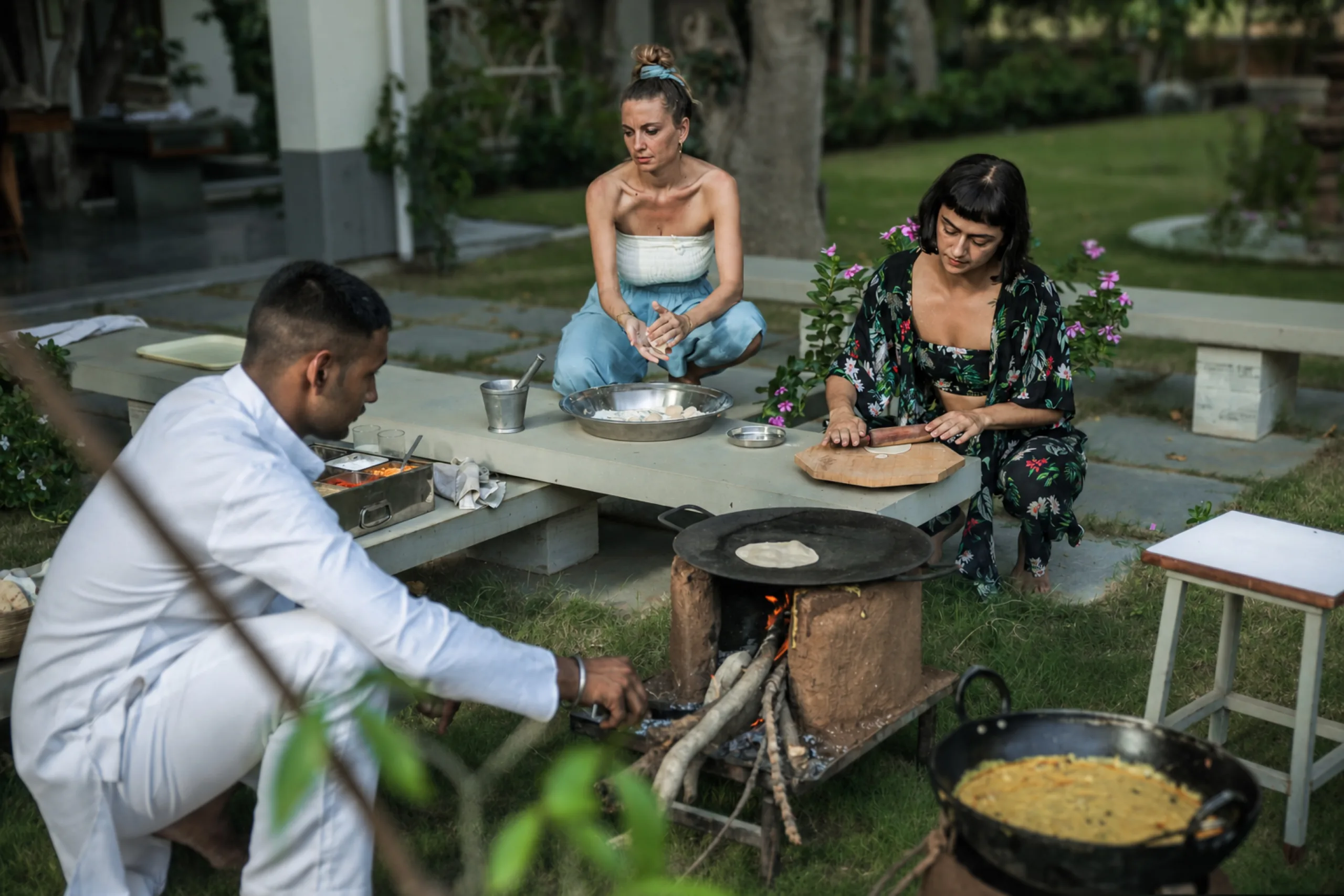
Grown on the farm. Cooked over open fire in front of you by Vish. Made from scratch every single day.
No farm, no good food. It's that simple. A real working organic farm, not a marketing slogan.
Harvested in season, prepped immediately, and served within hours of picking.
Fruit off the tree. Fresh milk, yoghurt and oil. A basil leaf still warm from the sun.
Minimal spicing and high heat. Real ingredients need timing and restraint.
The menu follows the season and the farm fields. No cans. No factory-made food.
Order in advance. Observe the meal timings. Let the kitchen cook slowly.
This is the actual farm, not a farm-to-table promise on a laminated card. Growing what we eat is the most honest rule we have. If we lived off the land and served food from somewhere else, the whole thing would fall apart. The best meals begin before the kitchen — in the soil, the vegetable garden, the dairy, the stone mill, and what is worth serving that day.


Nothing on your plate travels far to get here. The yoghurt is from our cows. The paneer is curdled in-house. The mustard oil is pressed on-site. The flour is milled here.


Watching Vish cook is half the experience. The other half is eating it. By the time you sit down, the kadhi has simmered over the hearth for two hours — the time a proper slow reduction demands. Yoghurt, gram flour, wood smoke, and precise timing. Good food refuses to be rushed, which is why advance notice matters.


Fresh ingredients need very little. Fresh palak, light seasonal spicing, hot rotis off the tawa, and chutneys ground that morning.


The fields keep the daily menu focused. In summer, sweet mangoes anchor the table; in winter, fresh greens take over. When tomatoes peak, they feature across meals; when they end, the kitchen moves on. We would rather cook six things well than hold forty under a heat lamp.


Per vegetarian meal, per person
